
Tool Evolution: Mine & Evolve
HomaAdventure
4.61.93K Reviews
- Version
- 2.10.2
- Installs
- 10.00M
- Age Rating
- Everyone
Screenshots
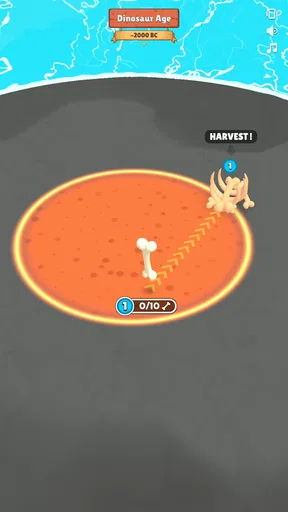
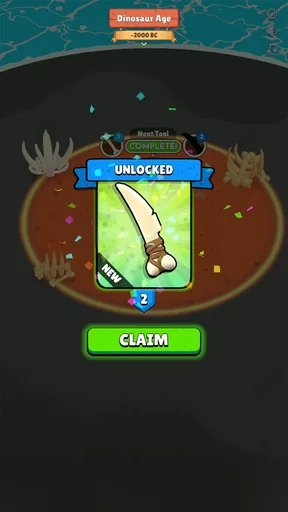
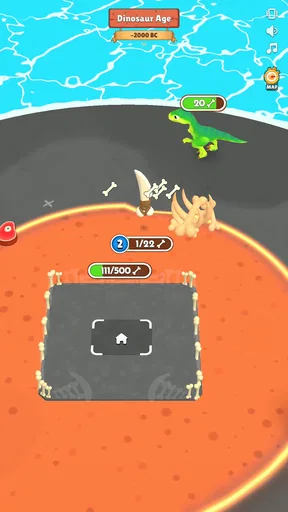
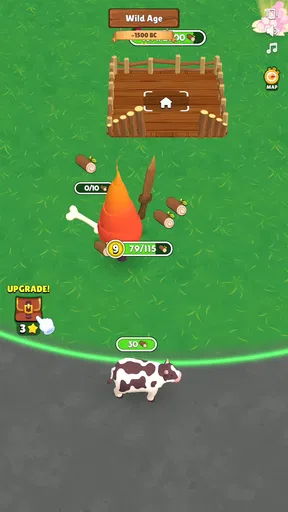
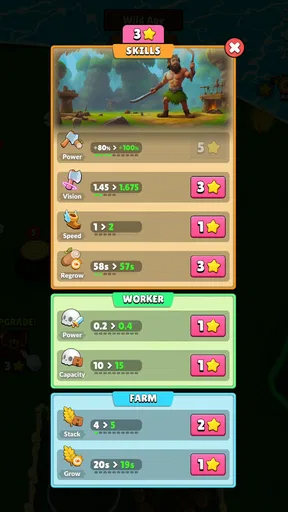
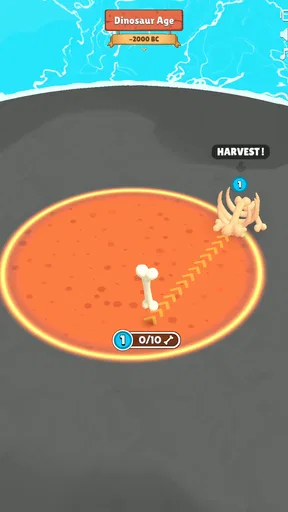
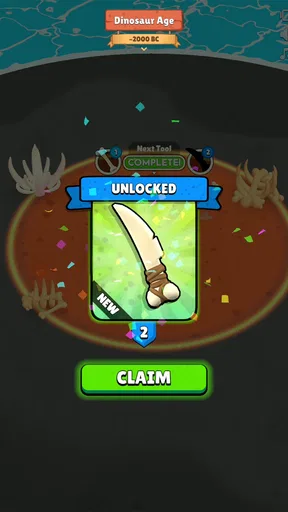
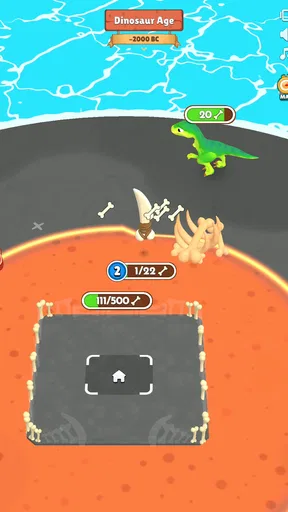
Our Review of Tool Evolution: Mine & Evolve
 Analysis by Appyee
Tool Evolution: Mine & Evolve is the kind of adventure game I can pick up without preparation. Its central idea is easy to understand: I gather materials, use tools, and move through a world that changes as those tools improve. That simple loop gives the game an immediate sense of progress, which is exactly why it works well during a short break or a quiet evening.
After spending time with it, my opinion is positive but measured. The first sessions are more compelling than the long-term routine, and whether it deserves a permanent place on your phone depends on how much you enjoy repeated harvesting and gradual upgrades. I would recommend it to someone who likes relaxed progression more than demanding combat or complicated strategy. I would not choose it for a player looking for a deep story, highly competitive play, or a game that constantly surprises after the opening stretch.
From the first tool to the first real routine
The opening appeal comes from how clearly each action connects to the next. I do not need to study a dense menu before understanding what I am supposed to do. The tool is not just an item I carry; it represents my ability to reach more of the environment and continue the journey. That connection between gathering and advancement makes the early minutes feel purposeful rather than like random tapping.
What I especially like is the physical feeling of moving from one stage of progress to another. A basic tool may feel limited, but that limitation gives the next improvement meaning. Instead of receiving progress only through a long explanation or a distant objective, I can see it in the way the environment becomes more accessible. For a casual adventure game, that is a smart way to make small rewards feel worthwhile.
The game is free to start, which makes it easy to test without committing money first. It is also rated for Everyone, so its straightforward presentation is suitable for a broad audience. I would still keep an eye on younger players if purchases are enabled on the device, since optional in-app items range from $0.99 to $19.99 each. That price spread matters more than the word “optional”: the game can be sampled freely, but a family device should have purchase controls in place.
In my first week, I found the strongest use case during small gaps in the day. A short session before leaving home, while waiting for food, or between tasks gives enough time to collect something and make visible progress. It does not demand the same concentration as a traditional action adventure, and that makes it more approachable than games that punish you for putting them down.
Why the evolving world matters
The age-based structure gives the harvesting loop a broader shape. I am not simply collecting the same material forever; the sense of moving through different eras gives the journey a destination, even when the individual actions remain familiar. This is important because gathering alone can become flat very quickly. The changing setting provides a visual and thematic reason to keep going.
That said, the appeal is more about momentum than discovery. I enjoy seeing what comes next, but I would not describe the game as a story-heavy adventure. Players who want character development, dialogue choices, or a carefully written narrative may find the experience light. Its pleasure comes from improvement and movement, not from following a complex plot.
One useful habit is to treat each session as a small work cycle rather than trying to play indefinitely. I usually begin with a simple goal: collect enough resources to improve the current tool, then stop when that target is reached. This prevents the harvesting from turning into aimless repetition and makes the next return feel more deliberate. The game is at its best when progression gives the session a clear endpoint.
How it compares with familiar alternatives
Compared with a conventional idle game, Tool Evolution: Mine & Evolve feels more connected to direct interaction because I am actively involved in gathering and moving through the environment. Compared with a traditional mining game, it is lighter and less concerned with complex planning, inventory management, or survival pressure. Compared with a story-led adventure, it offers faster rewards but less emotional and narrative depth.
That middle position is its main strength. I can recommend it to someone who finds idle games too passive but finds full survival adventures too demanding. It is also a better fit than a competitive title for a player who wants progress without rankings or pressure. On the other hand, if you already enjoy games built around deep crafting trees, careful resource economies, or difficult exploration, this may feel simplified rather than refreshing.
What remains after the novelty wears off
The important question is not whether the opening loop works. It does. The more difficult question is whether harvesting and tool improvement continue to feel meaningful once the initial excitement of the evolving world has passed. In my experience, the answer depends on your tolerance for repetition and on whether you set your own goals.
The recurring value comes from the convenience of a low-friction progression game. I can return after a busy day and understand what I was doing almost immediately. There is no need to remember a complicated quest chain or rebuild a strategy from scratch. That makes it reliable as a casual habit, especially for people who like seeing a small account of progress every time they open a game.
However, reliable is not the same as endlessly engaging. Once the basic rhythm becomes familiar, the satisfaction shifts. Early on, I play to discover the next change. Later, I play because I want to complete the next improvement. That can be enough for a few sessions each week, but it may not support daily play for everyone. The game earns repeat visits through continuity, not through constant reinvention.
Making the monthly routine work
If I wanted to keep it installed for several months, I would avoid treating it as my main adventure game. It works better as a secondary title alongside something with more variety. A practical routine would be to open it when I want a calm, predictable activity, focus on one upgrade path, and leave before the gathering loop becomes tiring.
That approach also makes the free-to-play structure easier to judge. I would first learn how satisfying the normal progression feels without spending anything. If the core loop already feels repetitive, purchases will not solve that problem; they may only shorten the time between upgrades. If I still enjoy the activity after repeated sessions, an optional purchase can be considered as a convenience rather than a requirement.
My most useful tip is to separate progress from speed. A faster route can be tempting, but the reason to play is the harvesting and evolution loop itself. If an item simply removes the waiting or effort that makes the game enjoyable, buying it may reduce the very activity that brought you back. I would only spend after deciding whether I want more interaction or merely quicker completion.
Another practical point is to play with a stopping rule. For example, I might finish one tool improvement or reach one clear environmental milestone and then close the game. This keeps the routine from expanding into repetitive checking. It also helps answer the long-term question honestly: if a short, controlled session still feels rewarding, the game has recurring value; if I need to force myself through several cycles, the novelty has probably run out.
The maintenance burden on your phone
From a player’s point of view, the maintenance burden is relatively low because the game’s structure is easy to resume. I do not need to maintain a complicated build or remember a large collection of objectives. That is a genuine advantage over heavier adventure games, where returning after a week away can feel like reopening a half-forgotten project.
The burden is instead mental repetition. Keeping the game installed means accepting that its regular activity is built around familiar actions. If you enjoy routine, that familiarity is comforting. If you need frequent new mechanics, it becomes the main reason to remove the game. I would describe the maintenance cost as small in time but potentially noticeable in attention: the game is easy to use, yet the same ease can make it feel predictable.
Storage and compatibility are also straightforward for many older devices, since the current version, 2.10.2, requires Android 7.1 or later. That makes it more accessible than games tied to newer operating systems. The developer is Homa, and the game has reached over 10 million installs, so it is clearly designed for a broad mobile audience rather than a niche group of specialist players.
The public response suggests that the basic formula is landing well: it holds a 4.6 average from around 116 thousand ratings, with roughly 1.9 thousand written reviews. I see those figures as evidence of strong general appeal, not proof that every player will enjoy the long-term loop. A large audience can confirm that the first impression is effective while still leaving room for individual differences in patience and preferred depth.
Where fatigue begins
The first source of fatigue is the gap between visible progress and meaningful change. Improving a tool feels good when it opens a noticeably different part of the journey. If several upgrades mainly feel like another step on the same path, the reward can become routine. This is not a flaw unique to this game, but it is especially relevant here because the core interaction is deliberately simple.
The second is the temptation to measure enjoyment by completion speed. Free-to-play progression can encourage me to think about how quickly I am advancing instead of whether I am having fun. That mindset is dangerous in a harvesting game. I would rather play slowly and enjoy the evolving setting than turn every session into a checklist of resources and upgrades.
The third is audience mismatch. A child or casual player may appreciate the clear objective and friendly adventure tone, while an experienced gamer may want more control over routes, equipment, or decisions. I would skip this game if I were specifically searching for a demanding mining simulation, a narrative campaign, or a multiplayer competition. It is not trying to be those things, and expecting it to become them will make the experience feel thinner than it needs to be.
There is also a personal fatigue test I use with games like this: after returning from a short break, do I feel curious about the next stage, or do I feel obligated to collect enough material to finish a task? Curiosity is a good sign. Obligation suggests that the routine has become maintenance without much pleasure. Tool Evolution: Mine & Evolve can remain enjoyable when I use it casually, but it is less convincing as an all-day game.
Who should install it
I think it is a good match for players who like visible upgrades, gentle exploration, and simple resource gathering. It suits someone who wants an adventure-flavored game that can be played in short bursts without requiring a long uninterrupted session. It is also a sensible choice for families looking for an Everyone-rated free game, provided purchase settings are managed responsibly.
I would recommend it to a friend who says, “I want something relaxing, but I still want to feel that I am doing something.” The tool-based progression answers that request neatly. I would not recommend it to a friend who says, “I need a game with deep choices that will keep surprising me for months.” For that person, a richer crafting adventure or a story-focused title would probably offer better lasting value.
The game also works well as a palate cleanser between more demanding titles. After a difficult competitive match or a complicated role-playing session, I can open it without carrying over stress or strategy. Its calm structure is not a weakness in that context; it is the reason to keep it available. The mistake would be judging it by the standards of a much larger adventure game.
My long-term verdict
Tool Evolution: Mine & Evolve earns a place on my phone if I treat it as a compact, repeatable adventure rather than a forever game. The opening is accessible, the tool progression gives harvesting a clear purpose, and the changing ages add enough direction to make the early journey satisfying. It is free to try, broadly compatible, and easy to understand without sacrificing the feeling of gradual advancement.
Its limitations become clearer with time. The central loop can lose energy when the next improvement feels too similar to the previous one, and players who need deep systems or constant novelty may move on quickly. Optional purchases also deserve restraint: I would test the unpaid experience first and spend only if the interaction itself remains enjoyable.
After the novelty fades, I see lasting value in short, intentional sessions rather than continuous play. The best reason to keep it installed is its dependable low-pressure progression, not an endless supply of surprises. For casual adventure fans, that is enough to make it worth trying. For players seeking a large, story-rich or strategically demanding world, I would choose a different game and return here only when I want something simple, familiar, and easy to pick up.
Verdict
Strengths of Tool Evolution: Mine & Evolve
- Simple mining and upgrading loop that is easy to understand.
- Short sessions make it suitable for quick breaks.
- Progression gives each new tool upgrade a clear purpose.
- Relaxing gameplay with little pressure or complicated controls.
- Works well for players who enjoy incremental improvement.
Limitations of Tool Evolution: Mine & Evolve
- Progress can feel repetitive after extended play sessions.
- Some upgrades may require considerable grinding to unlock.
- Gameplay depth is limited compared with larger simulation games.
- Ads or optional purchases may interrupt the progression experience.
- The long-term challenge may be modest for experienced players.
Other Releases by Homa
View All
Attack Hole - Black Hole Games
Arcade4.2

Agent Hunt – Hitman Shooter
Action4.5

Merge Master: Dinosaur Monster
Arcade4.2

Farm Land - Farming life game
Adventure4.5
Similar Picks in This Category
View All
Roblox
Roblox Corporation4.2

Pokémon GO
Niantic, Inc.3.5

Ninja warrior: legend of adven
TOH Games4.6

Ninja Arashi
Black Panther4.6

Eyes - The Horror Game
Fearless Games sp. j.4.5

Critical Action:Gun Strike Ops
FPS Shooter & Action Game4.3
Frequently Asked Questions
What is Tool Evolution: Mine & Evolve?
Tool Evolution: Mine & Evolve is a casual progression game centered on collecting resources, improving equipment, and evolving your tools through increasingly challenging stages. You typically mine materials, use them to upgrade or transform your tools, and unlock stronger abilities as you advance. Its simple controls make it easy to start, while the upgrade system provides a steady sense of progress for short or extended play sessions.
How does the gameplay work in Tool Evolution: Mine & Evolve?
The main gameplay loop involves mining or gathering resources, completing objectives, and spending the materials you collect on tool improvements. Better tools generally allow you to work faster, access tougher areas, or obtain more valuable resources. Progress is designed to be straightforward, although later stages may require more strategic upgrading and patience. The game is suitable for players who enjoy incremental progression rather than complex controls.
Is Tool Evolution: Mine & Evolve free to download and play?
Tool Evolution: Mine & Evolve can generally be downloaded without an upfront purchase, but the free version may include advertising and optional in-app purchases. These purchases can be used to speed up progress, obtain additional resources, or access convenience features, depending on the current version. You can usually play without spending money, although advancement may take longer if you choose not to use optional boosts.
Does Tool Evolution: Mine & Evolve require an internet connection?
The basic mining and upgrade experience may work during offline play, but some features can depend on an internet connection. Advertisements, reward videos, cloud-related services, updates, and certain events may not function without access to the internet. If you plan to play while traveling or with limited data, it is best to test the game offline first, since requirements can vary between versions and devices.
Is Tool Evolution: Mine & Evolve suitable for children?
The game uses accessible mechanics and does not usually require advanced reading or complicated strategy, making it approachable for younger players. However, parents should review its age rating, advertising, and optional in-app purchases before installation. If the game offers rewarded videos or purchase prompts, enabling device-level parental controls is recommended. Privacy requirements and content classifications may also differ between the Android and iOS versions.
Play our best games!


